What It Takes to Build a Bank From Zero
How we launched the Dominican Republic’s first neobank.

Note: Selected business outcomes, Internal performance data and app flows are omitted for confidentiality.
The launch of Qik was about much more than bringing another banking product to market. We wanted to give millions of Dominicans a simpler, more direct way to take control of their financial future.
Our CEO often said, “The only way to democratize the financial system is by giving people a direct line of access to fulfill their dreams.” That belief stayed with me. It gave the work a purpose beyond the launch and shaped how I thought about the experience and the organization we needed to build.
As the design leader, I was responsible for translating that ambition into product direction, building the design team, and bringing the customer’s perspective into decisions across the business.
We were creating something people would trust with their money, their plans, and their next steps in life. The ambition was exciting. The responsibility was just as significant.
Taking ownership of discovery
We began as a UI and UX team within development, responsible for turning business ideas into product experiences.
Under my leadership, our role expanded when we took full ownership of discovery. We became responsible for understanding the opportunity, bringing the customer’s perspective into planning, and helping define what the bank should build.
Cuenta Qik and Préstamos Qik were important examples of that shift.
We spent three months investigating market opportunities through a combination of design thinking methods, ethnographic research, and competitive benchmarking. We worked with the business team to establish clear objectives and connect what we were learning about people’s lives with what Qik wanted to accomplish.
Then we brought people from across the company into the ideation process. The research gave those conversations a shared starting point, helping different disciplines contribute ideas grounded in customer needs.
My responsibility was to lead that effort and turn its findings into a direction the organization could act on. Taking ownership of discovery meant being accountable for the reasoning behind our recommendations and showing how they connected customer needs, business objectives, and technology.
That changed the conversations we could lead. Alongside the capabilities people expected from a bank, we could explore features that connected more closely with their everyday lives and ambitions.
Savings Goals became one expression of that direction. It gave customers a way to organize their money around personal objectives, connecting the act of saving with something they wanted to achieve.
Later, we saw competing banks introduce similar capabilities into their products. Seeing that approach appear elsewhere in the market was a meaningful reminder of how expectations for banking were changing.
For me, this was a defining moment in the team’s evolution. Discovery gave us a stronger foundation for shaping Qik’s plans and taking responsibility for what would eventually reach customers.
Building the bank one step at a time
Qik did not arrive as a complete set of banking services on day one.
We began with the credit card, then introduced the account and continued expanding the experience. That gradual approach allowed us to keep listening to customers and shape the bank as we learned more about the role it could play in their lives.
The card was an entry point into a new banking relationship. The account expanded that relationship into saving and managing money. Lending and additional services continued to build on that foundation.
For the design team, each stage brought a new responsibility. We had to consider the immediate product while keeping the broader banking experience coherent.
My role was to connect those horizons: give the team a clear direction for what we were delivering while helping the organization think about what should come next.
We kept returning to the people we were building for. The goal was to shape a bank that responded to the needs of Dominicans and became more useful as their relationship with Qik grew.
Making control feel real
Our ambition to give people more control needed to show up in everyday interactions.
With the credit card, customers could freeze and unfreeze it in the app, view sensitive card details digitally, and adjust their spending limit within the amount approved. Cashback made part of the product’s value visible through money returned on purchases.
The account extended that thinking. Digital management, no opening or monthly fees, and no minimum balance requirement supported a more accessible way to begin saving and managing money.
These capabilities made our promise tangible. People could take action directly and have greater visibility into their finances.
But a feature only gives someone control if they can find it, understand what it does, and feel confident using it.
That was especially important as we introduced a new way of banking. Customers needed to understand what they were doing, what would happen next, and where they could turn when they needed help.
For me, simplicity was a question of understanding as much as speed. A shorter journey would only be valuable if people could move through it with confidence.
We also had to consider different levels of familiarity with digital products. What felt obvious to us might feel unfamiliar to someone managing their finances through an app. I wanted the team to keep that perspective close throughout the work.
Building the team that could carry the vision
We began as a small group of three. Over the course of the journey, the design organization grew into a multidisciplinary team of 12.
As our responsibility expanded, I had to think about the capabilities we needed and how ownership could grow across the team. More people would make us stronger if they had the context and confidence to contribute their own judgment.
I focused on setting a shared direction, raising the quality bar, encouraging healthy debate, and giving people room to take ownership of complex problems.
I wanted people to feel comfortable challenging an idea, including mine.
That meant paying attention to the everyday experience of being on the team. How we gave feedback, handled disagreement, and supported someone through a difficult problem would shape our culture as much as the work we delivered.
Discovery also gave designers opportunities to develop their influence. They could participate in defining problems, understand the perspectives of other disciplines, and see how their work connected to decisions across the bank.
One of the most meaningful parts of the journey was watching people grow into that responsibility. I saw designers become more confident in their judgment, expand their influence, and step into leadership roles of their own.
Mentoring them, making space for their creativity, and challenging them to think beyond individual screens was every bit as rewarding as seeing our work reach customers.
Their growth made the organization better equipped to support Qik beyond the immediate demands of launch.
Seeing the ambition become real
The bank continued to grow well beyond its first release. Qik now serves more than one million users and has achieved a Net Promoter Score of 80.
What began as an ambition to build a different kind of bank became an experience people chose to use, recommend, and make part of their financial lives.
What I carry forward
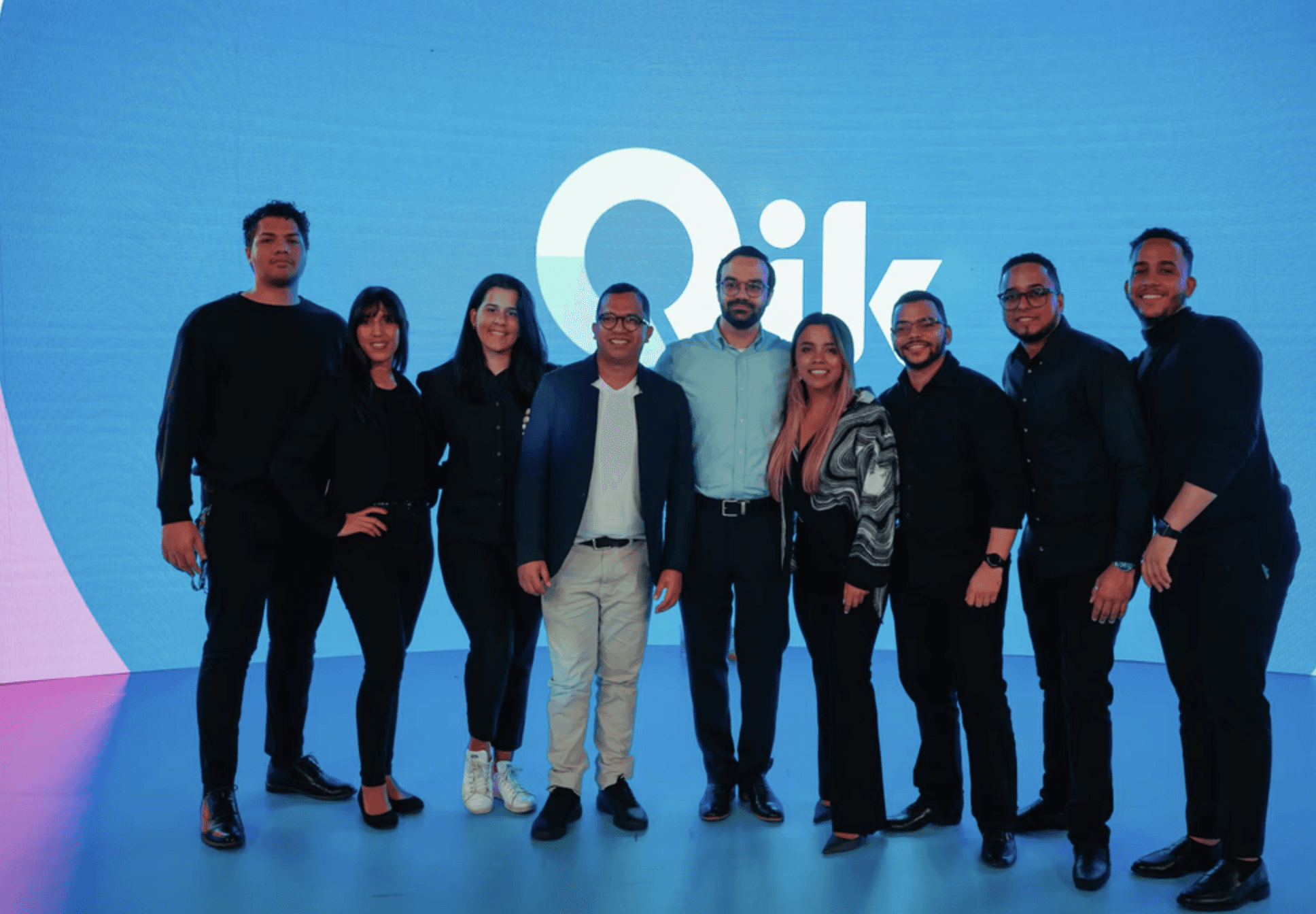
Looking back, Qik’s evolution and the team’s evolution were closely connected.
We introduced products gradually, listened to customers, and continued shaping the bank. At the same time, design grew from its initial place within development into a partner with broader responsibility for customer understanding and product direction.
My role was to lead that change: establish a clear direction, make discovery part of how the bank planned its products, and build a team capable of contributing across the business.
I am proud that we helped bring a new banking experience to the Dominican Republic. I am just as proud of the people who grew through that journey and the responsibility they learned to carry.
We brought a new bank to life, built a team, and gave the customer’s voice a stronger place in shaping what came next.